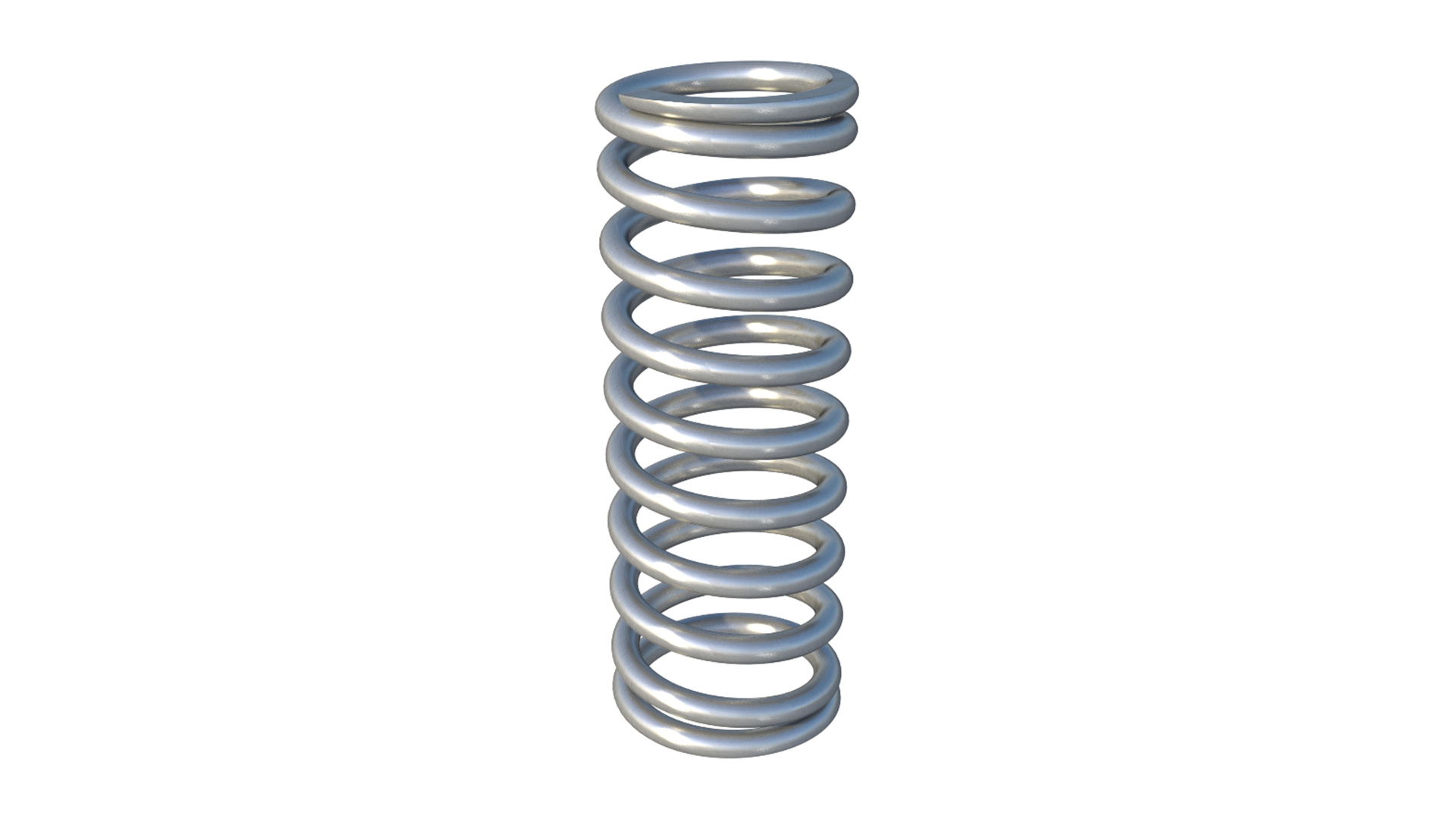
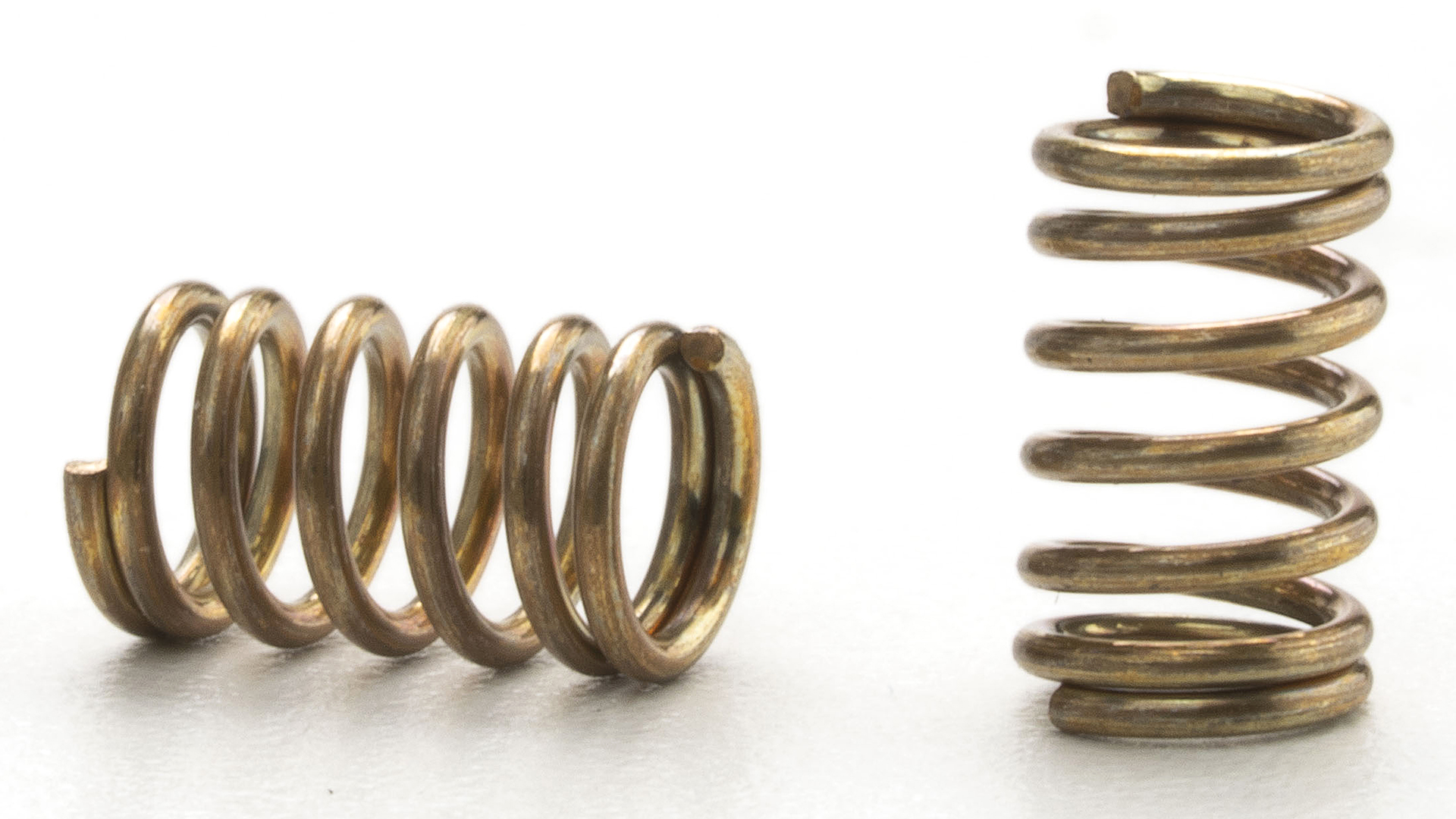
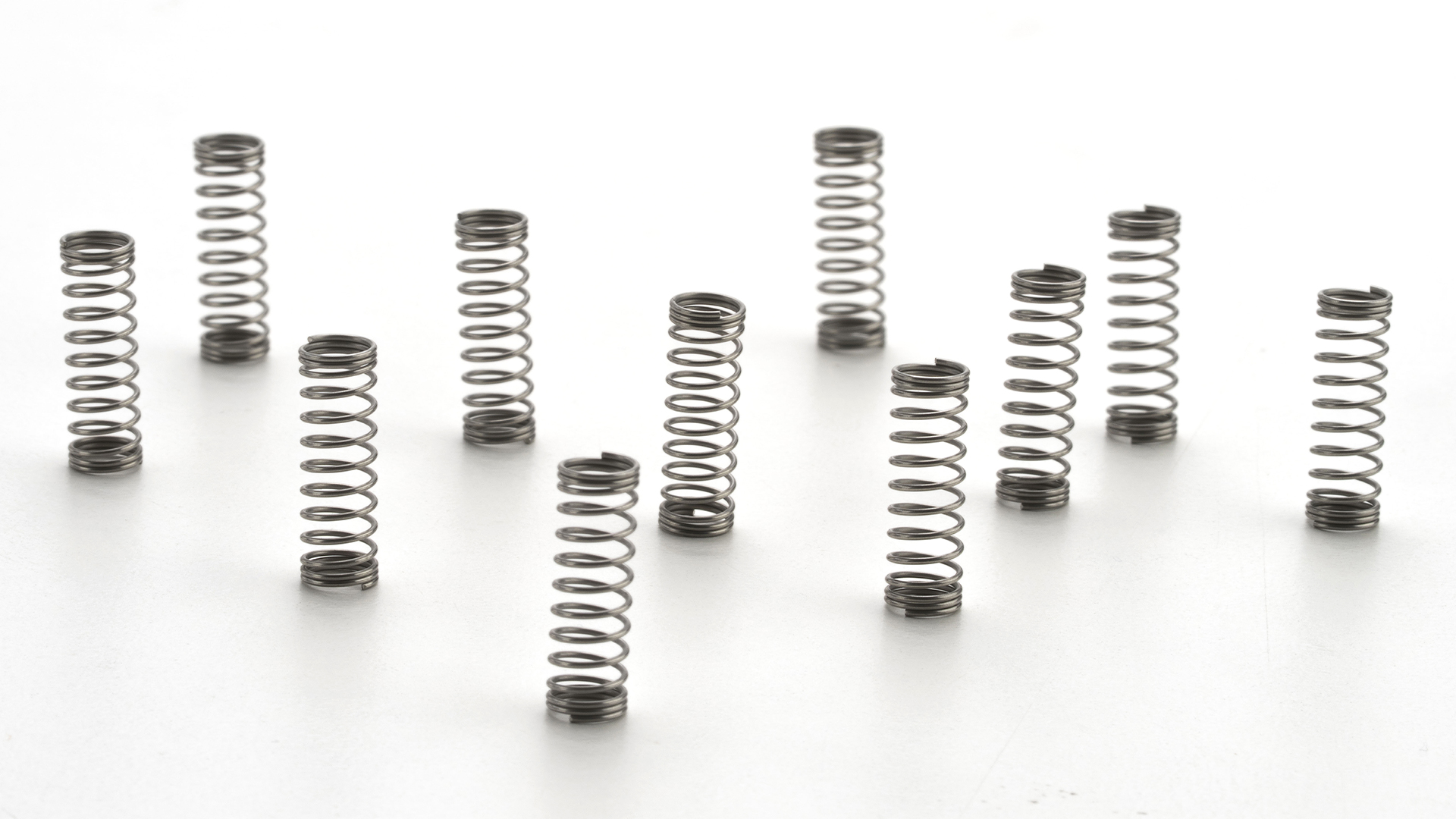
We design and manufacture cylindrical helical compression springs in round wire (with diameters starting from 0.10 mm) and square wire. We use not only specific materials compliant with UNI EN 10270-1, UNI EN 10270-2, and UNI EN 10270-3 standards, but also special materials with specific mechanical properties and high-performance alloys. We manufacture compression springs both compliant with UNI EN 13906-1, with the tolerances required by UNI EN 15800, and according to customer specifications. Cylindrical, biconical, tapered, with closed or open ends, normal, ground, deburred, right- or left-handed, subjected to heat stabilization treatment, cold settling, shot peening, surface protection treatments, passivation, and other specific treatments requested.
Technical definition
A compression spring consists of a wire or rod wound into a cylindrical helix, generally subjected to stress along the axis of the cylinder with non-contact coils. In this case, the load consists of a force acting along the axis that causes torsional, bending, and shear stresses, the former being predominant. Compression springs, ideally considered as rigid bodies, are generally subjected to a compressive load acting along the spring’s axis. In some cases, they may simultaneously be subjected to a load transverse to the axis. Helical compression springs are generally cylindrical in shape, although other shapes exist: conical, barrel biconical (convex), hyperbolic biconical (concave), or tapered.